
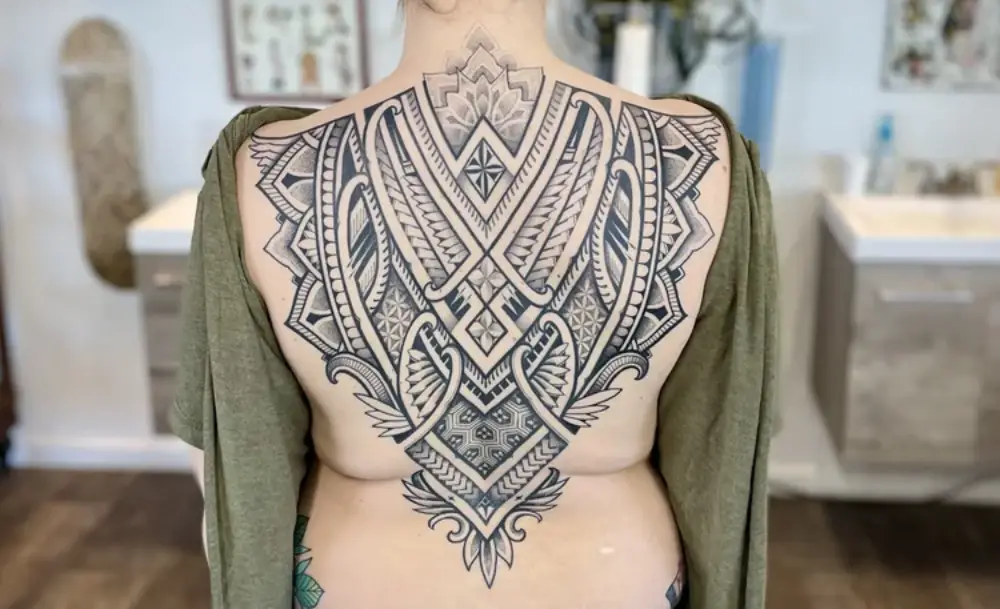
A large tattoo changes more than the area it covers. It changes the space around it, the relationship between existing pieces, and the options you have for future work.
For tattoo collectors, that makes the next decision different from choosing a standalone design. A back piece, chest panel, or full-leg project needs to work as an individual tattoo while also making sense within a larger collection.
At 18b Tattoo in the Downtown Las Vegas Arts District, the conversation starts with what you want to build—not simply what you want to fill.
Whether you live in Las Vegas or travel here to collect work, thoughtful planning helps protect both the next piece and the possibilities that come after it.
Collecting Tattoos Does Not Have to Mean Matching Everything
A tattoo collection can include different artists, styles, subjects, and periods of your life. Visual consistency is one option, not a requirement.
The more useful question is whether those differences feel intentional.
A bold traditional piece beside illustrative blackwork can have its own logic. So can a collection organized around individual artists rather than a single theme. Not every tattoo needs connecting background, and not every open area needs another image.
Before starting a large piece, decide what kind of collection you are building:
- One connected composition: A larger design that develops across a defined area.
- Distinct collector pieces: Individual tattoos with enough room to maintain their own identity.
- A mixed collection: Different styles and artists connected through placement, spacing, or recurring visual elements.
- An evolving collection: A significant new piece planned around tattoos already in place.
None is automatically better. Problems arise when the artist is planning one approach while the collector expects another.
Choose the Space Before You Finalize the Image
Collectors sometimes save an image for years without deciding where it belongs. With large-scale tattooing, placement is part of the design—not a final adjustment.
A back offers a broad surface for a central composition. A leg introduces changing contours and multiple viewing angles. A chest piece needs to account for the sternum, shoulders, and the relationship between both sides of the body.
Those differences affect what the artist can emphasize, where detail belongs, and how the tattoo reads in motion.
Instead of arriving with a finished layout that must fit a particular spot, bring the subject, the intended area, and the elements that matter most. Let the composition develop around your actual body.
Useful questions include:
- Where should the main focal point sit?
- How will the piece look from the front, side, and back?
- Should it stop at a clear boundary or leave room to extend?
- What nearby skin should remain available for future work?
- Will clothing regularly hide or interrupt an important part of the design?
The goal is not simply to make an image bigger. It is to make the image belong in that space.
Give Existing Tattoos a Role in the Plan
If you already collect tattoos, your skin is not a blank canvas. That is not a disadvantage, but it does change the assignment.
An older tattoo might become an anchor, remain separate, or limit where a new focal point can go. A small piece in a central location may have more influence on the layout than a larger piece near the edge.
Show your artist the entire surrounding area, not just a close-up of the space you want tattooed. Include anything that wraps around the body or sits near the proposed boundary.
Be clear about what must stay untouched.
There is an important difference between:
- Designing beside an existing tattoo.
- Connecting several existing tattoos.
- Reworking an older piece.
- Covering an older piece.
Those are different projects. Establishing which one you want helps prevent a consultation from moving toward changes you never intended.
Look for Large-Scale Composition, Not Just Impressive Detail
A close-up can show clean lines, texture, or careful shading. It cannot show everything you need to evaluate in a large tattoo.
Collectors should also look at the whole composition.
Does the main subject remain readable from a normal viewing distance? Does the design follow the body? Are secondary elements supporting the focal point, or competing with it?
When reviewing an artist’s portfolio, look for:
- Full views of completed large pieces.
- Healed examples when available.
- Work on body areas similar to your proposed placement.
- Clear separation between major subjects and background.
- Evidence that the artist handles your preferred subject and style well.
An excellent small tattoo does not, by itself, demonstrate experience composing an entire back or leg. Likewise, a technically detailed image is not automatically the right reference for the scale and placement you have in mind.
At 18b, artist fit is part of the consultation. The shop’s stated approach is to recommend a specialist elsewhere when that would better serve the project.
View the 18b artist portfolios.
Plan the Whole Piece Before Breaking It Into Sessions
You do not need every detail of a future collection decided today. You do need enough direction to avoid making the next stage unnecessarily difficult.
For a large piece, discuss the overall composition before treating the first session as a separate tattoo.
That conversation should establish:
- The intended coverage.
- The main subject and supporting elements.
- The relationship to existing work.
- Likely stopping points between stages.
- Areas being reserved for later decisions.
Ask how the project might look while it is unfinished. A multi-session piece may spend time as an outline, a partially shaded composition, or a mix of finished and unfinished sections.
That is different from collecting complete standalone tattoos one appointment at a time. Understanding the difference helps you commit to the actual process, not just the finished reference.
Planning a sleeve specifically? Read our guide to sleeve costs, sessions, and coverage.
Las Vegas Collectors and Traveling Collectors Have Different Scheduling Needs
Living in Las Vegas gives you a different planning situation from flying in for appointments.
Local collectors can discuss a schedule around work, healing, and other responsibilities without fitting every visit into a travel window. Traveling collectors need to account for return trips and what happens between them.
If you are coming to Las Vegas for a large tattoo, tell your artist:
- When you arrive and leave.
- Whether you can return for additional sessions.
- What other activities are planned during the trip.
- Whether the project needs to remain workable across longer gaps.
A pool day, prolonged outdoor plans, or clothing that rubs the tattooed area can complicate recovery. Discuss those plans before booking and follow your artist’s aftercare instructions rather than trying to fit healing around a packed itinerary.
The design should not be reduced—or the schedule compressed—simply because a flight is already booked.
Budget for a Project, Not Just an Appointment
Large-scale tattooing involves more than the cost of getting started.
Before committing, ask how the artist prices the work, what the initial estimate includes, and what could change as the project develops. Size, detail, placement, and the condition of the area can all influence the scope.
Useful questions include:
- Is the work priced hourly, by session, or another way?
- What can reasonably be estimated before the first appointment?
- How are deposits and later appointments handled?
- If the project takes longer than expected, how will that be discussed?
- Can the work be staged around a realistic budget?
The point is not to secure a promise that nothing will change. It is to understand the arrangement well enough to continue the project without avoidable surprises.
Bring Direction, but Leave Room for the Artist
An effective collector brief explains what matters without trying to solve every design decision in advance.
Bring a focused set of references. Explain what you respond to in each one: the contrast, the subject, the amount of open skin, the mood, or the way the composition moves.
Also explain what you do not want.
“I like the scale and dark background, but not the central subject” gives the artist something useful. A folder of unrelated images without explanation leaves more room for misunderstanding.
For a large piece, your consultation notes can be simple:
- Placement: Where the tattoo will go and how far it may extend.
- Subject: The central idea.
- Priorities: What must be included or preserved.
- Boundaries: What you do not want changed, covered, or added.
- Future plans: Nearby areas you may want to tattoo later.
- Logistics: Your location, availability, and budget considerations.
You are bringing the intention. The artist brings the judgment needed to translate it into a tattoo.
Planning a Large Piece at 18b Tattoo
18b Tattoo is an owner-led shop in the original 18-block Arts District of Downtown Las Vegas, at 1511 S. Commerce, Suite 140, near The Arts Factory and ReBAR.
For collectors, the starting point is a direct conversation about the work: the space, the artist, the existing collection, and the commitment involved. Appointments are recommended for larger custom projects.
A large tattoo does not need to fill every available inch or explain your entire collection. It needs a clear purpose, a composition that suits your body, and a plan you can realistically follow.