
A sleeve tattoo starts before the first appointment. The early decisions—style, coverage, placement, and how separate pieces connect—shape the entire project.
If you are planning a sleeve tattoo in Las Vegas, the most useful first step is not collecting more reference images. It is deciding what you want the finished arm to look like, even if you plan to build it gradually.
At 18b Tattoo in the Downtown Las Vegas Arts District, a sleeve falls within the shop’s custom tattoo work. Start with your idea, the arm you want tattooed, and any existing pieces. Those details give an artist something concrete to assess before discussing design, sessions, and pricing.
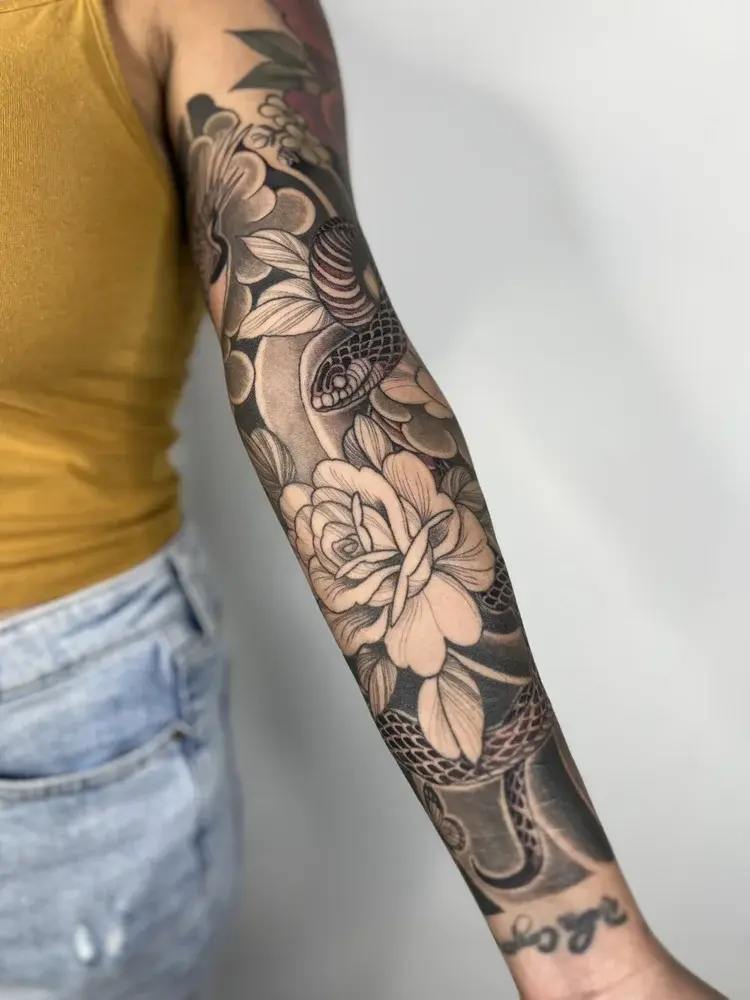
Full Sleeve, Half Sleeve, or Patchwork: What Are You Actually Planning?
“Sleeve” can describe different kinds of projects. Clarifying which one you want helps avoid a mismatch between your references and your expectations.
A full sleeve generally extends from the shoulder toward the wrist. The design needs to account for the whole arm—not just the outer section that shows in a photograph.
A half sleeve usually covers the upper arm or forearm. Its boundaries matter. Where should it begin and end? Will you eventually extend it?
A patchwork sleeve is a collection of individual tattoos rather than one continuous composition. The pieces can stand separately while still sharing a deliberate approach to spacing, scale, or style.
None of these is automatically the better choice. The important distinction is whether you want one connected design or a collection that grows over time. If you are unsure, bring examples of both. Explain what you like about each rather than asking an artist to combine every reference into one arm.
Should You Plan the Whole Sleeve Before Getting the First Tattoo?
You do not need every detail finalized before starting. You should, however, discuss the overall direction.
A first piece can affect the space available for everything that follows. A large forearm tattoo, for example, establishes a visual anchor that future work will need to accommodate.
Before choosing that first piece, consider:
- Whether you want a full sleeve eventually.
- Which subjects deserve the most space.
- Whether you prefer open skin or dense coverage.
- Whether the design should connect around the arm.
- How existing tattoos fit into the plan.
- Where you want the sleeve to stop.
For a patchwork sleeve, the conversation may focus more on placement and spacing. For a continuous sleeve, it may focus on the relationship between major subjects, background, and areas left open.
The goal is not to lock you into every future decision. It is to avoid making the next stage unnecessarily difficult.
How Much Does a Sleeve Tattoo Cost in Las Vegas?
There is no useful single price for every sleeve. “A full arm” describes the area, but it does not describe the amount of work.
A sleeve estimate depends on factors such as:
- Coverage and overall size.
- Complexity of the design.
- Amount of shading or solid coverage.
- Color or black-and-grey treatment.
- Existing tattoos that need to be incorporated.
- Artist and project scope.
- Time required across appointments.
An open composition with distinct pieces is a different project from a densely shaded sleeve. A half sleeve with one main subject is different from one built around multiple detailed scenes.
For a broader explanation of pricing factors, read our guide to tattoo costs in Downtown Las Vegas.
For your own sleeve, ask how the proposed work will be priced, what the initial estimate includes, and what could change it. If you have a budget limit, share it early so the scope can be discussed realistically.
How Many Sessions Does a Sleeve Tattoo Take?
A sleeve may require multiple appointments. The number and length of those appointments depend on the design, coverage, your ability to sit comfortably, and the artist’s approach.
A reliable schedule comes from reviewing the actual project—not from matching your arm to someone else’s session count online.
Before starting, ask:
- What is the proposed first stage?
- How will the remaining work be divided?
- How much appointment time should I allow?
- How will healing affect the next appointment?
- What happens if a session needs to finish earlier than planned?
Also discuss how the sleeve will look between stages. If you are building it gradually, understanding the unfinished stages can help you decide where to begin.
Can You Build a Sleeve Around Tattoos You Already Have?
Possibly. Existing tattoos change the design problem, but they do not automatically rule out a sleeve.
The artist will need to see their placement, size, spacing, and visual weight. The question is whether you want to preserve them as distinct pieces, connect them with new work, or change the overall direction.
Send clear photographs of the whole arm, including the inner and outer sections. Close-ups alone do not show how much usable space remains.
If an existing tattoo needs to be changed or hidden, that becomes a separate technical consideration. Our cover-up tattoo guide explains why not every old tattoo can simply disappear beneath a new design.
Choosing an Artist for a Sleeve at 18b
Choose around the work you want, not just the next available appointment.
The 18b artist directory lists approaches including American traditional, illustrative blackwork, fine line, black and grey, Japanese-inspired work, and Polynesian tattooing.
Those are different visual directions. Before asking about availability, identify which portfolios are closest to your intended result.
For a sleeve, look beyond individual tattoo subjects. Pay attention to how larger work fits the body, how separate elements relate, and whether the artist’s approach matches the coverage you want.
You do not need to know the technical name of your preferred style. A few well-chosen references and a plain explanation of what appeals to you are useful starting points.
Planning a Sleeve as a Las Vegas Local or Visitor
Where you live matters when a project may require return appointments.
For Las Vegas locals, discuss a schedule you can realistically maintain. Consider work, outdoor activities, and any plans that could interfere with healing between sessions.
For visitors staying on the Strip or near Fremont Street, share your arrival and departure dates before discussing appointments. A short trip should not be treated as a promise that an entire sleeve can be completed.
If you expect to return to Las Vegas, explain that too. The artist can discuss whether the project and your travel schedule are compatible.
18b is located at 1511 S. Commerce, Suite 140, in the Downtown Las Vegas Arts District. When planning a visit, allow time for the appointment itself rather than trying to fit a substantial tattoo session between other commitments.
Pool plans and prolonged sun exposure also matter. Review our Las Vegas tattoo aftercare guide before choosing your dates.
What to Send Before a Sleeve Consultation
You do not need a finished sleeve drawing to make an inquiry. You need enough information for the artist to understand the project.
Prepare:
- Coverage: full sleeve, half sleeve, or patchwork.
- Placement: left or right arm, including where you want it to stop.
- Direction: subjects, themes, and styles you are considering.
- References: images with a short explanation of what you like.
- Existing work: clear photographs of the entire arm.
- Budget: a working range or limit, if you have one.
- Timing: preferred dates and whether you live locally or are visiting.
It is also useful to name anything you do not want—such as dense background coverage, certain imagery, or tattooing below a particular point.
A focused inquiry makes the next conversation more productive. It gives the artist a basis for discussing fit, scope, and what needs further planning.
Start Your Sleeve Tattoo Conversation at 18b
If you are considering a sleeve tattoo in Las Vegas, start by sharing the coverage you want, a few references, and photographs of any existing tattoos.
You do not need every decision made. The first conversation should help clarify the design direction, artist fit, and practical next step.